Library
As featured on:


Welcome to the Building Forensic Library, your evidence-based resource for understanding mould, indoor air quality, building-related illness and forensic environmental investigation.
This library brings together more than forty years of scientific research, global field experience and peer-reviewed analysis from Jeff Charlton, one of the UK’s leading authorities in mould, contamination and environmental health.
Explore technical papers, professional guides, training content and the full Jeff Charlton Legacy Series.
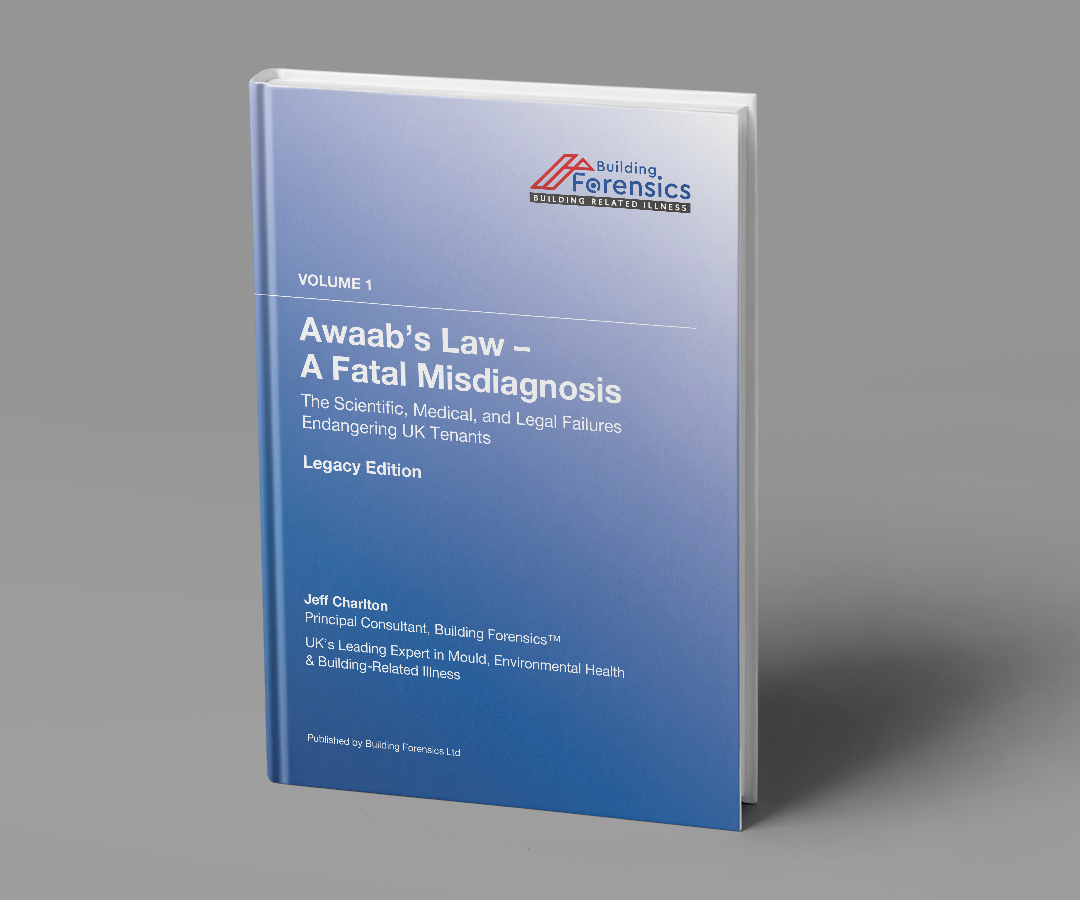
The Jeff Charlton Legacy Series
A multi-volume collection examining failures in environmental investigation, medical interpretation and public policy. These volumes provide the technical basis for understanding the scientific and legal challenges in the UK’s current approach to damp and mould.
Available now:
-
Volume 1 - Awaab's Law: The Urgent Repeal
-
Volume 2 - The Science Against Awaab's Law
-
Volume 3 - The Complete Forensic Framework
-
Awaab Peer Review Paper: A Critical Scientific and Forensic Review of the Awaab Ishak Case

Coming Soon
Over thirty new volumes planned, including:
-
The Silent Epidemic
-
Particle and Bioaerosol Risk in Homes
-
Mycotoxins and Illness Pathways
-
Actinobacteria: The Hidden Killer
-
Airflow Pathways and Exposure Mapping
-
PANS/PANDAS and Environmental Triggers
-
The Collapse of Moisture Science
-
Why Medical Treatment Fails in Toxic Environments
-
The New Era of Real-Time Environmental Data
Awaab’s Law and the National Failure of Evidence-Based Policy
Awaab’s Law has become one of the most discussed pieces of housing legislation in the UK, yet its scientific foundation has never been fully examined. Building Forensics has produced the first independent, forensic and medically informed review of the Awaab Ishak case, revealing more than 250 documented investigative failures across environmental sampling, medical interpretation, building science and legal reasoning.
The publicly presented narrative, that damp and mould caused the death of Awaab Ishak, is not supported by the science.
This paper explains why.
Free Peer-Reviewed Paper Download
A Critical Scientific and Forensic Review of the Awaab Ishak Case. This comprehensive document is the central reference used by housing providers, legal teams, clinicians and investigators seeking clarity around Awaab’s Law.
What’s inside:
-
The environmental sampling errors that led to incorrect conclusions (only one spore detected, no species ID, no tox testing)
-
More than thirty unexamined medical differential diagnoses
-
Legal contradictions between Awaab’s Law and primary UK safety legislation
-
A framework for scientifically competent damp and mould investigation
-
Policy recommendations for councils and housing associations
This paper is available free of charge as part of Building Forensics’ commitment to correcting public misunderstanding and supporting safe, evidence-led housing practice.
About the Author
Jeff Charlton’s expertise is not theoretical, it is forged from forty years of fieldwork inside some of the most contaminated, complex and high-risk environments in the world.
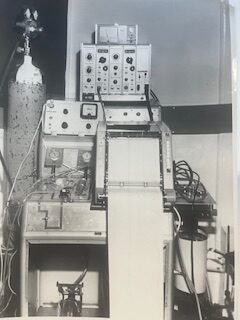
He began in medical physics and nuclear medicine, working in isotope control at St George’s Hospital before advancing into military instruction, where he trained in radiological science and environmental hazard management. Those early years shaped a career defined by direct exposure to real-world biological, chemical and structural failures.

Jeff spent the 1980s and 1990s in fire, flood and contamination aftermaths across Sweden, Germany, Israel, the USA and Kuwait.
After the Gulf War, he led the UK’s only government-approved decontamination programme in Kuwait — clearing ministerial buildings, oil facilities and the Emir’s Palace. His work was filmed by BBC Dispatches and later adopted by the US Army Corps of Engineers as the technical basis for national training materials.
Returning to the UK, Jeff founded the British Damage Management Association, establishing the certification, ethics and competency frameworks still used industry-wide today. He became a technical contributor to British Standards, a founding contributor to IICRC S520 and a consultant to national CBRN preparedness initiatives at Porton Down, RUSI, Whitehall and Homeland Defense.
But his career changed direction entirely after two personal events made the subject of mould exposure impossible to ignore.
His daughter was diagnosed with aggressive leukaemia and prepared for radiotherapy. Jeff recognised the symptoms were environmentally triggered, investigated the home himself and discovered a toxigenic contamination that mimicked blood cancer in her clinical markers. Within six weeks of removing exposure, she recovered without chemotherapy.
Understanding the medical–environmental interface became his life’s work.
Jeff has since helped thousands of families, clinicians and legal teams uncover hidden environmental drivers of chronic illness. His cases include child health failures, social housing disputes, CIRS investigations, insurance litigation, disaster recovery failures and international high-risk exposures. His work has been featured on the BBC, ITV, Sky and Channel 4.
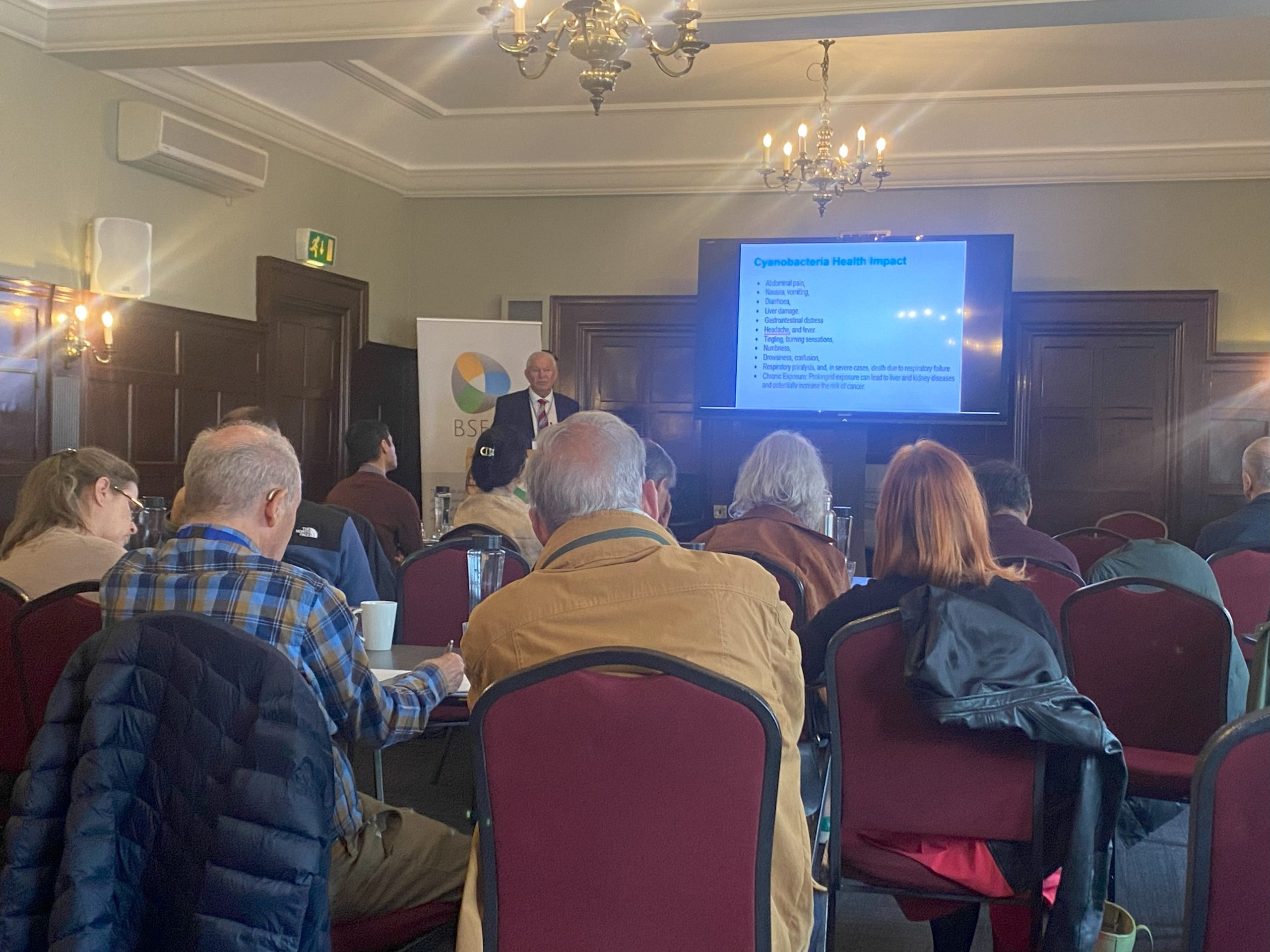
He now directs Building Forensics, lectures internationally, authors the Legacy Series and leads Mould Lab, a family-run service providing affordable diagnostics.
Jeff’s mission is simple:
To ensure that no family suffers from an avoidable environmental exposure and no public policy is built on incomplete or inaccurate science.

Testing equipment used at St George's Hospital