Water damage, damp and mould investigation
|
Hot News
Jeff Charlton, principle consultant at Builidng Forensics has been awarded a Fellowship at the Institute of Specialist Surveyors and Engineers. Jeff is chairman of special interest groups including mould which has attracted international support in the development of new guidelines and balanced information.
A seminar in London held by the Property Care Association and presented by an American “expert” resulted in a much needed debate about mould and health hazards. Click here to download PDF which refutes much of its content.
JOIN our FREE Mould discussion group on Linked in Click here to join group and ask mould related questions or debate issues
For information on mould related health and treatment issues, we recommend you visit the NHS and Fungal Research Trust web site Aspergillus Patient Support
Building Forensics provides full investigationservices into sick or water damaged buildings which include the cause of possible health effects from flooding, leaks and condensation. The investigation can include construction defect, mould and biological,chemical testing. This can often include post flood deposits, construction materials and various chemicals such as MVOCs, and mycotoxins, the chemicals sometimes released by moulds and some bacteria.
Hot News
We now provide state of art ERMI and Mould Range reports to assess normal or average spore levels.We provide mould testing to assess DNA from 36 target organisms which can indicate a sick building. (see mould sampling) and this is a reccomended protocol by WHO.
We are pleased to support your doctor with both laboratory reports from sampling and most importantly can provide access to leading mould and toxicology experts. See (Medical support) and (Toxicology)
The inflammatory results of allergies can be assessed too and cockroach and mites are assessed where required.
Our surveys are designed to identify the causes of moisture problems and contamination, responsibilities and solutions where possible with legal support in claims where required.
Building Forensics provide you with information on what causes mould, the possible health effects of mould and how to recognise the symptoms of mould exposure.
News
We have a new (discussion forum) where you can ask questions and gain valuable information from others affected by mould.
We provide support and information on mould removal and mould decontamination and probably most importantly, advice on how to prevent moulds reoccurring.
Building Forensics are recognised as leading experts in independent and unbiased appraisal of water damage, mould, contamination and its causes.We were asked by BBC News to assess a block of flats where 36 out of 56 flats were suffering from mould related health issues. see news clip. We were also responsible for identifying mould and moisture issues resulting in a £12million rebuild of luxury flats as seen on Buildings from Hell.(see about us)
Hot Topic Any form of water damage from condensation to leak will result in a biological amplification resulting in a possible health hazard
What we do
- Investigation and survey for hidden mould contamination and water damage
- Identification of leaks and causes of condensation and or mould (see construction defect)
- Mould testing, sampling and laboratory analysis (see sampling section)
- Investigate, report and reccomend solutions to recitify moisture, condensation issues
- Writing mould removal and decontamination protcols and controls for contractors
- Supervising mould removal and or decontamination providing independent clearance
- Assessments of previous mould removal and decontamination for legal or liability issues
- Provide supportive evidence for legal claims or subrogation (see legal section)
- Check your new property is safe now or before you move in (see property check)
- Medical team support identifying pathogens possibly responsible for symptoms (see medical support)
- Expert witness and health complaint or material damage claim support (see legal section)
- Decontamination of air and surfaces after controlled mould removal (Mycotoxins and VOCs)
New Service
We are pleased to announce a linked association with two leading American mould and water damage specialists, These doctors will support your medical team where possible.
|
Toxic mould and black mould are terms often used to describe "allergenic mould" which depending on dose and environmental conditions, is any and all moulds. While some toxic moulds are black others can be white, red, green, pink and almost any colour.
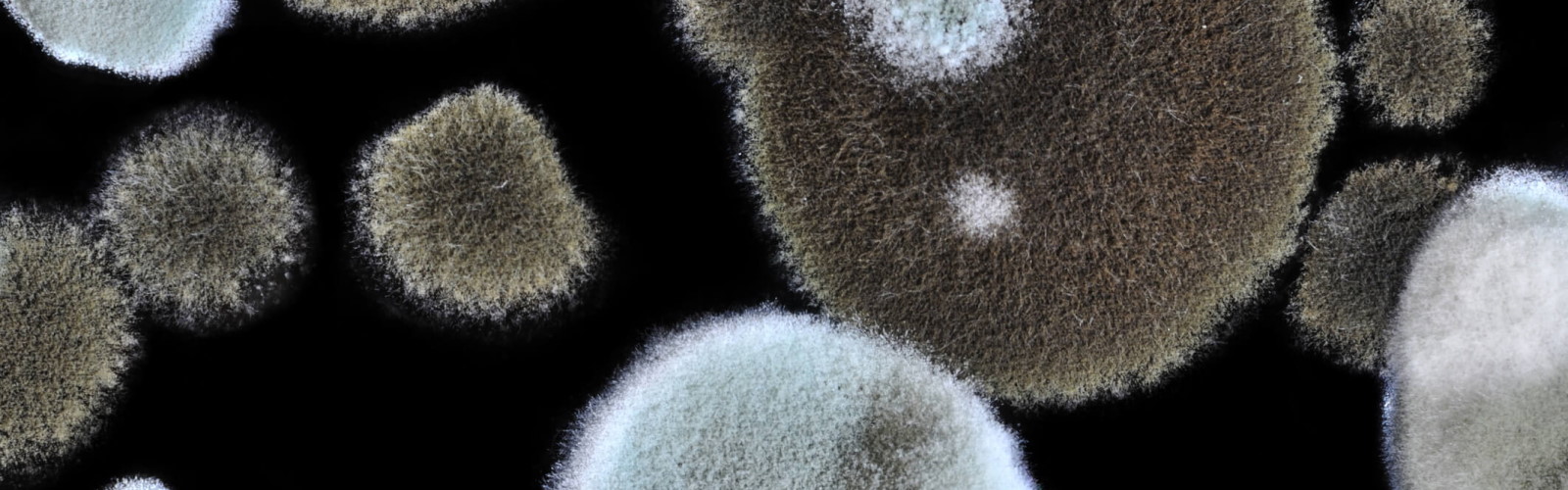
Culture dish growing Trichoderma "white mould" which can be extremely toxic
|

|
|
Building Forensics filming "Help My House is Falling Down" also seen on "Homes from Hell" BBC News, SKY and Channel 4, Despatches
Video on mould health issues by Professsor Malcolm Richardson
See also "Resources" section
Water damaged buildings result in the development of Biotoxins and Nuerotoxins which can cause various acute and chronic health effects.
If you have typical symptoms but are not sure if they are building related, the VCS eye test can provide a guide to possible toxin poisoning. Test yourself for biotoxin (mould and bacteria related) chemical exposure (see medical support)
Identifying heat loss
and water leaks with IR.

Investigation claims & damage
Training in mould and decontamination
|
A client with typical skin infection from water damaged building
Unfortunately mould contamination is only part the toxic soup likely to be present in a water damaged building and apart from its detrimental health effects it has a major benefit as an indicator for other potential contaminates such as bacteria and very toxic chemicals produced by mould and other organisms. Put simply, mould removal is only removing the visual hazards and not the microscopic substances which can remain for decades often seriously affecting occupants health, if not removed or destroyed. See mould removal, decontamination and toxicology sections.
Hot Topic
Mouldgrowth is often hidden and visible mould most definitely indicates a potential health hazard
Damp and wet buildings provide ideal growth conditions for mould and other organisms. The dampness can be caused by post flood events, rising or penetrating damp and of course high humidity through poor ventilation, resulting in condensation all resulting in mould. Building defect and even construction design can be the cause and it is imperative that the true cause of mould growth and its associated health effects are investigated properly before decisions are made to rectify or remediate.
UK Historic approach to water damage and mould
We have never in 20 years, seen a contractors drying or decontamination certificate that was worth the paper it was written on and our testing can usually prove contamination from incidents years previously and also prove that competent decontamination was not undertaken. Despite expensive presentation and often worthless guarantees this may already be a helath issue to current occupiers and may cause some problems regarding disclosure when selling a property.
Hot Topic
One cubic inch of mould can release between 1 and 10 billion spores, a few hundred can be enough to make you ill
Building construction or design defects can often be a major contributor to mould growth especially in new or recent builds and mould growth often appears on outside walls where typical causation is found to be air leakage, faulty vapour barriers and missing insulation.

|

|

|
| The shower room with no visual mould but significant hidden reservoirs affecting the health of the family! Despite no visual mould or even moisture detection, the presence of a toxic mould reservoir was detected and exposed within double plasterboard walling surrounding a shower tray. |
There is a general misunderstanding of
black mould and toxic mould All moulds are allergenic and all produce chemicals called metabolites which mould uses to digest its food or are used to defend or attack other moulds and bacteria. Moulds produce toxins such as “Penicillium” which it uses to kill bacteria, often also present in wet homes. The bacteria similarly release streptomycin type mycotoxins to kill mould and the result is often a toxic soup of both live and dead mould and bacteria.

Critical barriers and negative pressure are usually required to prevent the contamination spreading to other areas |

Proper personal protection is essential when dealing with toxic mould, its chemical mycotoxins and other likely pathogens present. |
The outer fragmented and fractured shell or spore case of dead mould and bacteria, killed by fungicides and bleach, or dried out, may result in the release various chemical components, (mycotoxins) freely. These tiny sub micron fragments which are easily inhaled can be covered in the mycotoxins or allergens which may result in health issues from both skin absorbency, ingestion and inhalation.
Hot Topic
Mould treatment begins with resolving the moisture issue and then removing the mould in a controlled manner
The chemicals often released from mould during their life cycle can include very hazardous substances which are recognised as "toxic" These hazards are usually concentrated in small areas where occupants can be exposed to them for days or years from both living and dead mould growth, often resulting in sensitisation, allergies and many health side effects, see table below and toxicology section.
The World Health Organisation, backed by the worlds leading scientists say that mould can trigger asthma and many serious health effects in susceptible people. Mould reaction can be triggered by dose or length of exposure, sensitisation or reduced immune system, which may be the result of age which includes both young and old, use of illegal or prescription drugs, chemotherapy, transplants and HIV, long term illness such as CFS and ME. Those that have been exposed to hazardous chemicals from mould exposure for long periods can be expected to have a reduced immune system due to the constant challenges of dose.
| Frequent headaches |
Depression |
Chronic fatigue |
Allergies |
| Neurological problems, poor concentration and forgetfulness |
Skin rashes, nose bleeds
Eye irritation blurred vision
|
Stomach and digestive problems frequent diarrhea |
Chronic sinusitis |
| Joint aches and pains |
Muscle wasting
Weight gain
|
Frequent fevers, flu like symptoms |
asthma or respiratory problems |
Some moulds produce carcinogens and toxins which, subject to dose and personal immune response may result in serious conditions affecting the brain, lung, liver and kidney and these include Ochratoxin, Sterigmatocystin, Patucin. (See mycotoxin testing)
Some toxins cause neurological symptoms typically suspected of ME type effects, temporary blurred vision during exposure. Infection of eye, nails, and skin are possible too.
Investigation of mould and health issues
An investigation into mould must start with a moisture mapping exercise. This is to identify the cause of the mould growth. The cause may influence the mould investigation process too. If mould is visible, sampling is probably unnecessary but if moisture, condensation and health issues are present the mould may be hidden. As mould prefers dark warm areas, cavity walls and generally hidden areas are a prime concern.
The investigation should start with a walk through to identify typical visual markers followed by infra red scanning and moisture measurement of air and surfaces.
Mould sampling where required should follow the protocols laid down by the World Health Organisation which propose PCR-DNA and Total Spore Counts. These sampling techniques have replaced the historic use of culture plates which invariably provide false or misleading analysis.
Hot Topic
Killing mould with bleach and poisons is not recognised as a suitable process and dead mould is often more toxic or allergenic than live mould.
Following the sampling a report should follow which outlines cause and effect with recommendations for repair and restoration and most importantly decontamination.
The use of biocides and mould killing paints is not recommended by any of the international community or indeed the WHO. Dead mould can be more hazardous than live mould as its dead spore case ruptures releasing its chemical content onto respirable fragments.
Hot Topic
Mould removal is not necessarily decontamination, decontamination is the removal of airborne and settled spores and most importantly the destruction or removal of chemical residue known as mycotoxins. (see decontamaintion section)
We provide independent unbiased investigation into building defect, damp and mould issues, utilising some of the most advanced equipment and available technologies in Europe in association with our government approved and licensed laboratories in the USA.
Evidence of Health impact from mould.
With minute quantities of these chemicals, often at a molecular level being used in medicine, it must be accepted by anyone, that continual exposure to mould within a property there may result in exposure to a substantial release of these or similarly potent chemicals. "Dose makes the poison". Mould produces extremely potent chemicals some of which are used by doctors and these include, penicillium a drug to kill bacteria, some of which your body needs, and cyclosporine A, a drug used to prevent transplant rejection by turning off the immune system and even "Statins" used to reduce cholesterol come from mould too. cancer and tumor treatments can include drugs called "Ribotoxin A" and this is derived from the mould aspergillus.We are not medically trained but we can provide the medical profession with accurate identification of toxins, chemicals and both genus and speciation of mould to assist in the diagnosis of medical condition.

Client with mottled and burning skin caused by hidden mould exposure
Mould fungal balls from a clients intestine said to be the same genus and species as those present in her home.
Is Mould a Health Hazard ?
There is by some, debate as to whether or not mould is hazardous to health. Some even say the jury is out. There is no doubt and we have listed several internationally respected web sites which should remove any doubt as to the very real health concerns of mould exposure. Please see our Resource Centre or sample links below.The emphasis here is long term exposure and personal defence from the natural immune system and while short term exposure may affect some individuals long term exposure to toxins will affect most by sensitisation or dose.We have presented two documents on these issues and they can be seen at the top of the page and supportive information in the "Resources" section.
The only debate in our opinion is how much mould or water damaged building related toxins are a health hazard and over what time frame and this can even vary between family members. As with any hazard if it could be a risk, remove or control it.
British Government agencies and the Association of British Insurers sponsored a document "Preparing for Floods" in which (CIRIA) outline the very real health hazards of mould to builders working in a flooded property wet for just three days
"During restoration (mould), precautions should be taken to protect workers. Well-fitting respirators with toxic particle cartridges are recommended; dust masks are not adequate"
With many flooded homes and indeed moisture affected homes often having moisture and environmental conditions contusive to mould growth from months to years, you may wonder why the health issues and diagnosis are not better known?
Internationally respected web information on mould
- World Health Organisation Guidelines on Dampness and Mould 2009
- British Asthma Association (87 articles)
- Canada Mortgage & Housing Corporation (352 articles)
- New York City Council Guidelines for residence affected by mould.
- National Health Service
- Centres of Disease Control
- Environmental Protection Agency (Similar to HSE) USA
- Construction Industry Research and Information (CIRIA)
Mould presence may be due to many causes but the prime requirement is moisture which may be the result of any or all the following:
1 Lifestyle
The amount of moisture generated by a family is not removed usually because of inadequate ventilation or poor heating regimes usually due to poor insulation.
Drying wet clothes inside a room or cooking peas with the lid off the saucepan is often stated as causation which invariably is found to be unsubstantiated and usually easy to refute.
2 Construction defect
This is invariably the cause and may be caused by original building defects or home improvements and our investigations usually identify these issues.
3 Leaks and penetrating or rising damp
These issues are usually easily recognised by moisture mapping and we use infra red thermography and ultrasonic meters to compare adjacent areas for moisture equilibrium.
4 Humidity and condensation
These two issues are usually the most likely issues of causation. Mould cannot grow without moisture and the source of moisture may be camouflaged but resulting mould are clear indicators. Data logging and moisture mapping can readily identify these issues and lead to source.
Mould Removal and Decontamination
There are many fallacies regarding mould decontamination. See our sections on mould removal and mould decontamination., mould sampling and Toxicology.
The first issue must be to what standard should mould be removed. There are various international guidelines on spore presence and what is normal but no standards. The current belief is that different people will react differently to differing levels of exposure. Similarly one whisky can send some off the rails while others can drink a bottle without visual effect. Some smoke 40 cigarettes a day and state it’s the reason they lived to 105 while others die of smoking related disease at 50.
Smoking was seen to be macho up to the late 1990s and the Marlboro type adverts showing the Marlboro Cowboy (who died of lung cancer at age 52) was a normal advert which was replaced with pack warnings of “Smoking Kills” Building Forensics suspect that mould will become a similar issue as science investigates the evidence is current and substantial anecdotal evidence of mould health hazards. Current absence of evidence is not evidence of absence and medicine and science may have to catch up to what is now internationally accepted as a recognised health hazard.
Mould remediation must take account of both viable, live spores and growth but more importantly recognise the need to remove the “non viable” spore fragments covered in possible mycotoxins and secondary metabolites which can be inhaled or be a skin irritant. The remediation should follow internationally recognised mould removal protocols and then subsequent chemical decontamination where deemed necessary.
The law and mould. COSHH 2002 &
HHSRS
Mould components are recognised toxic chemicals and listed in the Control of Substances Hazardous to Health COSHH.
Mould is recognised as a Class 1 Health Hazard under the 2004 Housing Health & Safety Rating System which states mould as a very serious health hazard and in the same risk category as asbestos. Surveyors applying the HHSRS should be fully aware that the identification of mould requires a technical approach as laid down by the World Health Organisation. This approach should assess all components including causation, rectification and accurate assessments of potential health hazards. Failure to make accurate assessments may be seen contrary to normally accepted risk and hazard assessment guidance and corporate responsibilities in light of the adequate guidance available.
Mould assessments must take account of all relevant information and will include a proven scientific approach where unknown or hidden health hazards may be present.
Most importantly the failure to properly assess the health hazards present and which may subsequently be proven by investigation and or medical record support may result in liability issues.
Mould Identification
If the visible mould growth is identified as being related to a single moisture source, then sampling is usually unnecessary and decontamination is simply source removal and cleaning following moisture remediation. Disinfectants and bleach or fungicides should not be used. They can kill mould but removing the water source will do the same and as previously mentioned “dead or non viable mould” may be a greater health risk. Removal and cleaning is the only recommended action which can only follow the removal of the moisture source.
The level of cleaning is debatable and this will depend on the sensitivity of those potentially exposed to any residue.
Sensitivity may be caused by long term exposure and may be a significant factor in the protocols specified and reflective costs of detailed cleaning and clearance and Building Forensics can assist in these areas.
Without recognised mould exposure standards, it is impossible to state a generalisation of what a successful decontamination is. This is a major issue for those who may be physically affected by inadequate cleaning or those that pay for unwarranted decontamination. Building Forensics provide objective site specific guidance and protocols on decontamination and can provide clearance.
Mould prefers dark moist areas to grow and these are usually out of sunlight. Behind wallpapers, in cavity walls, under floor coverings or generally interstitial cavities. If mould growth is the result of a specific issue such as a localised leak then this can readily be remediated by DIY following simple instruction. However where moisture and humidity have been free to penetrate substrates and the hidden areas for a period of time, usually only a few days, hidden mould may be present and this may require a more detailed investigation including air sampling around surrounding areas likely to be affected. The extent of sampling should reflect risk and hazard perceived and should also account for known or suspected health issues.
The hazards, well recognised should be risk assessed against those exposed and this will be influenced by age, personal health, condition of immune system. The immune system can be damaged by various day to day issues such as the use of long term prescription, smoking, alcohol abuse, cancer treatments including chemo and radio therapy.
What we provide
We provide independent state of art investigation of building and construction defect and possible health hazards. The investigation focuses on water and moisture issues which are related to penetrating and rising damp, condensation, and resultant mould. Following the survey and laboratory analysis of samples, where or if taken, we provide a protocol for remediation and decontamination with clearance criteria if required.
Building Forensics will undertake detailed damp and mould investigation of indoor air quality issues with air scans to identify over 400 VOCs and SVOCs and specifically target the 23 most recognised toxic mouldsknown or expected to grow inside buildings. We also provide detailed investigation into mould growth and other likely pathogens including bacteria and general health effects post flood or water damage
We are different from other Building surveyors and Environmental Hygienists
We trained in and developed the forensic investigation of building and construction defect whereas most other surveyors trained in construction. We assess the obvious and potential flaws against effect and causation and not compliance to legal or building standards.
In our investigation we use over £60,000 of specialist equipment at no additional charge, and we use current state of art technology in gathering samples and evidence before sending by Fed X to our nominated partner specialist laboratories in USA and Europe for overnight or next day analysis. Our lab costs and analysis are almost always more cost and time effective than UK based services.
We are totally independent and work for Insurers, Builders, Homeowners, Surveyors and Landlords. Our reports are based on the Civil Procedure Rules and whoever the client is, the facts are displayed accurately and most importantly without bias.
We have been investigating water damage and building defect for over 25 years. Initially trained in Sweden our principle consultants have trained and worked world wide in damage restoration and decontamination including wide area disasters such as New Orleans Thailand and war zones such as Kuwait. Our principle consultant has trained and worked in USA and was part of the “Toxic Mold Task Force” which produced the internationally recognised water and mould guidelines IICRC S520
A regular conference speaker our principle consultant Jeff Charlton is an industry recognised expert and has been featured in many TV and radio documetariesand news items including: "Buildings from Hell" "Help my house is falling down" Sky and BBC ITV news programs and the Channel 4 program "The Clean Up Man"